

The global A2 milk market was valued at USD 2.86 billion in 2025 and is projected to grow from USD 3.19 billion in 2026 to nearly USD 8.35 billion by 2035, registering a compound annual growth rate (CAGR) of 11.31% during the forecast period from 2026 to 2035. Market growth is being fueled by increasing consumer awareness of health and wellness, rising demand for nutritious and easily digestible dairy products, and the expanding use of A2 milk in infant formula and other premium dairy applications.

What is A2 Milk?
A2 milk is produced by cows that naturally contain only the A2 beta-casein protein, unlike conventional milk, which generally contains both A1 and A2 proteins. Many consumers believe that A2 milk is gentler on digestion and causes less stomach discomfort compared to regular milk, making it particularly attractive for individuals who experience mild dairy sensitivity but are not lactose intolerant.
Native cow breeds such as Gir, Sahiwal, and Guernsey naturally produce A2 milk, whereas many commercial dairy breeds produce both A1 and A2 proteins. The growing consumer preference for clean-label, minimally processed, and naturally sourced dairy products has significantly increased the popularity of A2 milk worldwide.
Get Sample Link: https://www.precedenceresearch.com/sample/1232
Market Overview
The A2 milk market has evolved from a niche premium dairy category into a mainstream health-focused segment. Consumers are becoming more selective about the nutritional quality of their daily food intake, and dairy manufacturers are responding by introducing innovative A2 milk products across multiple categories.
Growing disposable income, urbanization, changing dietary habits, and increasing spending on functional foods have collectively contributed to market expansion. Governments and healthcare organizations are also promoting better nutrition, indirectly supporting demand for premium milk alternatives.
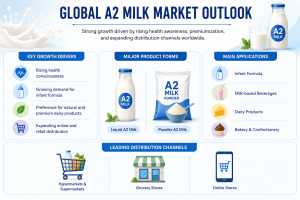
Today, A2 milk is available in multiple formats including fresh liquid milk, powdered milk, infant formula, yogurt, butter, cheese, ghee, ice cream, and other dairy-based products.
Major Factors Driving the A2 Milk Market
Rising Consumer Awareness About Digestive Health
One of the biggest growth drivers is the increasing awareness surrounding digestive wellness. Many consumers experience digestive discomfort after consuming conventional milk and are actively searching for alternatives that are perceived as easier to digest.
Although scientific research is still evolving, consumer perception regarding the digestive benefits of A2 milk has become a powerful market driver. Educational campaigns, health blogs, and nutrition experts continue to increase awareness about A2 protein milk.
Growing Preference for Premium Dairy Products
Consumers are increasingly willing to pay premium prices for products that offer perceived health advantages.
The premiumization trend within the dairy industry has encouraged manufacturers to introduce organic A2 milk, grass-fed A2 milk, hormone-free dairy products, and specialty infant nutrition products.
As household incomes continue to rise across developing economies, premium dairy consumption is expected to expand considerably.
Increasing Demand for Infant Nutrition
Parents are becoming increasingly conscious about infant nutrition and are seeking products that support healthy digestion.
Manufacturers are introducing A2-based infant formulas that are marketed as containing naturally occurring A2 protein without the A1 variant. Growing birth rates in emerging economies and increasing spending on premium baby nutrition continue to strengthen this segment.
Innovations in A2 Dairy Products Beyond Fresh Milk
The A2 milk industry has evolved far beyond the sale of fresh liquid milk. Dairy manufacturers are increasingly introducing a wide range of value-added A2 products to meet changing consumer preferences for convenience, nutrition, and functional foods. Today, A2 milk is being used to produce yogurt, cheese, butter, ghee, milk powder, ice cream, flavored milk, protein beverages, and infant formula. These products allow consumers to enjoy the perceived digestive benefits of A2 protein while expanding the availability of premium dairy options across different age groups and lifestyles.
Product innovation is also helping companies diversify their revenue streams and strengthen their competitive position. Manufacturers are developing lactose-friendly dairy products, high-protein beverages, probiotic yogurt, fortified milk, and ready-to-drink nutritional drinks made from A2 milk. The growing demand for clean-label foods has encouraged brands to minimize artificial additives and focus on natural ingredients, organic certification, and sustainable packaging. As research and development continue, the market is expected to witness the launch of more specialized A2 dairy products tailored for athletes, children, seniors, and health-conscious consumers, further expanding the industry’s growth potential.
Sustainable Dairy Farming and Its Impact on A2 Milk Production
Sustainability has become an important focus area for dairy producers as consumers increasingly value environmentally responsible food production. A2 milk producers are adopting sustainable farming practices that not only reduce environmental impact but also improve animal welfare and milk quality. Practices such as rotational grazing, efficient water management, renewable energy usage, responsible manure management, and reduced greenhouse gas emissions are becoming more common across modern dairy farms. These initiatives support long-term agricultural sustainability while meeting consumer expectations for ethically produced dairy products.
Animal welfare also plays a significant role in sustainable A2 milk production. Farmers are investing in better housing conditions, balanced nutrition, preventive healthcare, and stress-free environments to maintain healthier herds. In addition, many producers are using recyclable packaging materials and eco-friendly transportation methods to reduce their carbon footprint throughout the supply chain. As governments implement stricter environmental regulations and consumers increasingly choose sustainable brands, dairy companies that integrate responsible farming practices into their operations are likely to gain a competitive advantage in the global A2 milk market.
The Role of Technology in Modern A2 Dairy Farming
Technology is transforming every stage of A2 milk production, from cattle breeding to milk processing and quality assurance. Dairy farmers are increasingly using precision farming technologies to monitor animal health, improve productivity, and ensure consistent milk quality. Artificial intelligence (AI), Internet of Things (IoT) sensors, wearable devices, automated milking systems, and cloud-based herd management software enable farmers to track feeding patterns, milk yield, reproduction cycles, and early signs of disease in real time. These innovations reduce operational costs while improving overall farm efficiency.
Genetic testing has become another essential technological advancement in the A2 milk industry. Farmers can identify cows carrying the A2 beta-casein gene and selectively breed them to gradually expand A2-only herds. Automated quality control systems and digital traceability solutions also enhance transparency by allowing manufacturers to verify product authenticity throughout the supply chain. As dairy operations continue to adopt digital technologies, production efficiency, product consistency, and consumer confidence are expected to improve significantly, supporting long-term market growth.
How Food Manufacturers Are Expanding the Use of A2 Milk
Food manufacturers are increasingly recognizing A2 milk as a premium ingredient that can add value to a wide range of dairy and food products. Beyond traditional milk consumption, A2 milk is being incorporated into bakery products, chocolates, confectionery, nutritional supplements, protein shakes, desserts, ready-to-drink beverages, and infant nutrition products. This diversification enables manufacturers to serve consumers seeking healthier alternatives while differentiating their product portfolios in a highly competitive food industry.
The growing popularity of functional foods has further accelerated the use of A2 milk in product development. Companies are combining A2 milk with probiotics, vitamins, minerals, and plant-based ingredients to create innovative health-focused products. Restaurants, cafés, and specialty beverage brands are also introducing A2 milk-based coffee, smoothies, milkshakes, and premium desserts to attract health-conscious customers. As demand for clean-label and nutrient-rich foods continues to rise, food manufacturers are expected to explore new applications for A2 milk across multiple food and beverage categories, creating additional opportunities for market expansion.
Read Also: Whey Protein Market
Regional Analysis
Asia Pacific
Asia Pacific dominates the global A2 milk market and is expected to maintain its leading position throughout the forecast period. The region benefits from a large dairy-consuming population, rising disposable incomes, rapid urbanization, expanding middle-class demographics, and increasing awareness of digestive health. Countries such as China, India, Australia, and New Zealand have become major production and consumption hubs due to strong dairy industries and growing demand for premium nutrition.
India plays a particularly significant role because of its large population of indigenous cattle breeds that naturally produce A2 milk. Government initiatives supporting dairy development, increasing investments in organized dairy farming, and expanding e-commerce grocery platforms are further accelerating regional market growth. Rising demand for premium infant nutrition and functional dairy products is expected to sustain Asia Pacific’s market leadership over the coming decade.
North America
North America represents one of the fastest-growing markets for A2 milk, driven by increasing consumer preference for premium, natural, and minimally processed dairy products. Growing awareness of digestive wellness, clean-label foods, and functional nutrition has encouraged many consumers to switch from conventional milk to A2 milk. The region also benefits from advanced dairy farming practices, strong cold-chain infrastructure, and high consumer spending on health-focused food products.
Manufacturers continue investing in product innovation, organic certification, and direct-to-consumer sales channels to strengthen their market presence. The expanding availability of A2 milk through supermarkets, specialty retailers, and online grocery platforms is expected to support future market expansion.
Europe
Europe represents a mature dairy market characterized by high-quality production standards, strong regulatory frameworks, and increasing demand for premium dairy products. Consumers across the region are becoming more interested in organic farming, sustainable agriculture, and functional foods, creating favorable conditions for A2 milk adoption. Countries including the United Kingdom, Germany, France, and the Netherlands are witnessing increasing demand for premium dairy alternatives.
European dairy companies are focusing on product innovation, environmentally friendly production methods, and premium branding to attract health-conscious consumers. Sustainability initiatives, recyclable packaging, and carbon reduction programs are also becoming important competitive differentiators within the regional market.
Latin America
Latin America is emerging as a promising market for A2 milk due to improving economic conditions, expanding retail infrastructure, and growing awareness of nutritional wellness. Countries such as Brazil, Mexico, Argentina, and Chile are witnessing increasing demand for premium dairy products as household incomes continue to rise. Investments in modern dairy farming, improved cold-chain logistics, and expanding supermarket networks are expected to support market growth throughout the forecast period.
Middle East & Africa
The Middle East & Africa region is gradually emerging as an attractive market for premium dairy products. Rapid urbanization, increasing healthcare awareness, improving living standards, and rising disposable incomes are encouraging consumers to adopt healthier dietary choices. Demand for imported premium dairy products is increasing, particularly in urban centers where consumers are seeking high-quality nutrition. As organized retail expands and awareness of A2 milk grows, the region is expected to present significant long-term growth opportunities.
Future Innovations Expected in the A2 Milk Industry
The future of the A2 milk industry is expected to be shaped by continuous innovation in dairy farming, food technology, genetics, and consumer nutrition. Advances in precision breeding and genetic screening will help dairy farmers expand A2-producing cattle populations more efficiently while maintaining high standards of animal health and productivity. Researchers are also exploring improved processing techniques that preserve the natural nutritional properties of A2 milk while extending product shelf life and maintaining freshness.
Digital technologies will play an increasingly important role in the industry’s future. Blockchain-enabled traceability, AI-driven quality monitoring, predictive herd management, and smart packaging solutions are expected to enhance product transparency and supply chain efficiency. Manufacturers are also likely to introduce personalized nutrition products, fortified A2 dairy beverages, functional protein formulations, and premium organic dairy offerings designed to meet the evolving preferences of health-conscious consumers. As investments in research, sustainability, and product development continue to grow, the A2 milk market is well positioned for long-term innovation and global expansion.
For report inquiries and custom research requirements, please contact our analyst team at sales@precedenceresearch.com | +1 804 441 9344.