

Transforming Agriculture with Sustainable Pest Management Solutions
The global biopesticides market was valued at USD 7.78 billion in 2024 and is expected to grow significantly, reaching approximately USD 32.17 billion by 2034. With an impressive compound annual growth rate (CAGR) of 15.25% from 2025 to 2034, this market is being propelled by the rising adoption of eco-friendly and sustainable agricultural practices. Key drivers include increasing demand for residue-free food, tightening regulations on chemical pesticides, and accelerated innovations fueled by Artificial Intelligence (AI) technologies that enhance precision pest control and product development.
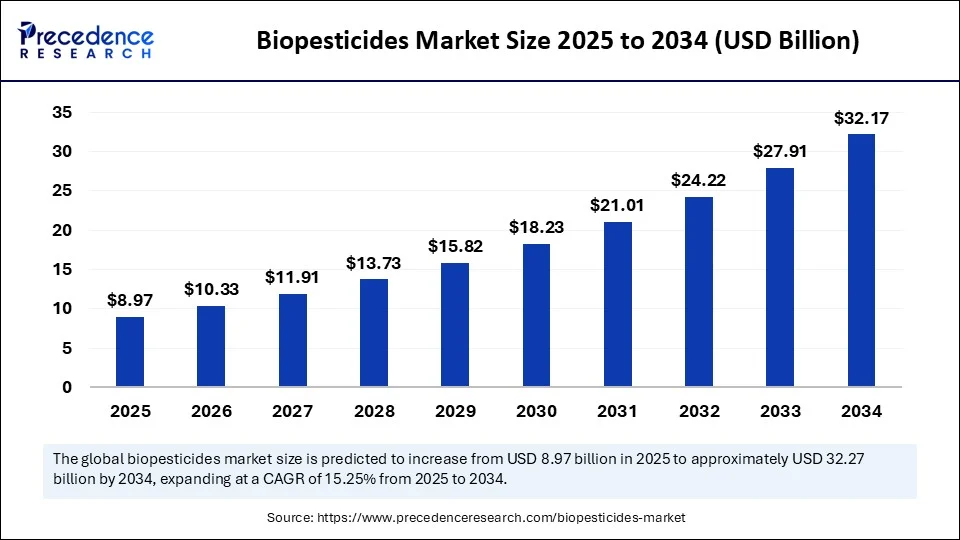

Quick Insights
-
Market Size (2024): USD 7.78 billion
-
Projected Market Size (2034): USD 32.17 billion
-
CAGR (2025–2034): 15.25%
-
Dominating Region: North America
-
Fastest Growing Region: Asia Pacific
-
Key Market Drivers: Sustainability mandates, regulatory support, consumer demand for organic produce
-
Top Players: Industry leaders and biotech innovators advancing microbial and botanical biopesticides
-
Segments Covered: Product type, source, mode of application, formulation, crop type, distribution channel, end user, region
What Opportunities and Trends are Shaping the Future of Biopesticides?
The market’s upward trajectory is influenced heavily by the shift toward sustainable farming. Farmers globally are driven to reduce chemical residues, embracing biopesticides that are biodegradable and target-specific. AI is playing a pivotal role in this transformation by:
-
Enhancing crop health analysis and pest outbreak predictions
-
Accelerating research on new microbial strains and formulations
-
Streamlining supply chain management for optimum product integrity
Moreover, emerging economies across Asia, Africa, and Latin America offer substantial untapped growth potential. The rise in organic farming, alongside government incentives for ecological farming, creates fertile ground for expanding biopesticide adoption.
Expert Commentary
“The biopesticides market is on the cusp of a paradigm shift, driven by impactful AI integration and sustainability imperatives. As global awareness escalates, we foresee enhanced adoption that not only benefits crop yields but also safeguards environmental health,” said Dr. Ananya Mehta, Principal Consultant at Precedence Research. “Manufacturers focusing on education, innovative formulations, and expanding reach into emerging markets will dominate the future landscape.”
Market Scope
| Report Coverage | Details |
| Market Size by 2034 | USD 32.17 Billion |
| Market Size in 2025 | USD 8.97 Billion |
| Market Size in 2024 | USD 7.78 Billion |
| Market Growth Rate from 2025 to 2034 | CAGR of 15.25% |
| Dominating Region | North America |
| Fastest Growing Region | Asia Pacific |
| Base Year | 2024 |
| Forecast Period | 2025 to 2034 |
| Segments Covered | Product Type, Source, Mode of Application, Formulation, Crop Type, Distribution channel, End User, and Region |
| Regions Covered | North America, Europe, Asia-Pacific, Latin America, and Middle East & Africa |
Regional and Segmentation Analysis
North America: Market Leader
North America’s dominance is attributed to advanced farming techniques, regulatory encouragement to curtail chemical pesticide use, and a network of R&D institutions fostering innovation in microbial and botanical pest control. Strong consumer preference for organic produce drives farmer adoption and facilitates subsidies for eco-friendly solutions.
Asia Pacific: Fastest Growing Landscape
With burgeoning population and food security challenges, Asia Pacific is witnessing swift biopesticide uptake. Nations like India and China are championing sustainable practices, targeting large agricultural bases. Strategic investments by global bio-agri giants and supportive policies enhance accessibility, positioning this region as a future growth epicenter.
Product Types and Sources
-
Bioinsecticides: The most dominant product type, widely used against crop-damaging pests in cereals and staple crops, driven by their safety profile and efficacy.
-
Biofungicides: Experiencing rapid growth propelled by rising fungal diseases affecting fruits and vegetables, particularly in controlled environments like greenhouses.
-
Microbial Biopesticides: Leading by source, derived mainly from bacteria, viruses, and protozoa, valued for versatility and broad-spectrum pest control.
-
Fungal Biopesticides: Gaining momentum due to effectiveness in managing plant pathogens and restoring soil health.
Application and Formulation Preferences
-
Foliar Sprays: Remain the preferred mode due to ease of use, effective coverage, and quick action on crops. Recent technological advances in spraying equipment enhance their efficiency.
-
Seed Treatments: Garnering growth by protecting seeds during germination, boosting plant vigor, and reducing repeated pesticide necessity.
-
Liquid Formulations: Dominant for their rapid mixing and application efficiency, favored in foliar and irrigation-based delivery methods.
-
Dry Formulations: Fastest-growing segment, valued for ease in handling and longer-lasting in soil applications.
End Users and Distribution Channels
-
Commercial Farmers: Lead market adoption due to compliance needs and demand for residue-free crops.
-
Horticulture & Greenhouse Growers: The fastest-growing segments owing to demand for organic high-value fruits, vegetables, and flowers.
-
Indirect Sales: Currently dominant distribution channel, featuring retailers and wholesalers expanding market access.
-
Direct Sales: Fastest growing channel, emphasizing personalized vendor-farmer interactions and strong brand loyalty.
Read Also: IV Bags Market Surges Toward $7.2 Billion by 2034
Latest Breakthroughs from Industry Leaders
Innovations in AI-driven pest control systems and microbial strain development highlight the industry’s cutting-edge progress. Key examples include AI platforms enabling real-time crop and pest health monitoring and microbial fermentation advancements improving biopesticide shelf life and field performance.
Challenges and Cost Pressures
Despite promising prospects, the biopesticides industry faces hurdles such as:
-
Shorter Shelf Life: Many biopesticides have limited stability, complicating storage and logistics, especially in remote areas.
-
Farmer Awareness: Inadequate understanding of long-term benefits and correct usage still favors traditional chemical pesticides in some regions.
-
Regulatory Fragmentation: Varying regulations across countries add complexity to global commercialization efforts, requiring harmonized standards.
Addressing these challenges will require investment in farmer education, R&D for more stable formulations, and innovative delivery mechanisms.
Case Study: Expanding Biopesticide Usage in Asia Pacific
In India, biopesticide adoption has soared due to government schemes promoting organic farming and food safety. Collaborations among agricultural cooperatives, biotech companies, and NGOs have improved farmer outreach, training, and affordability. Customized microbial formulations adapted to local pests and climates have resulted in a 20% increase in crop yield for participating farms, showcasing the real-world impact of targeted biopesticide adoption.
Conclusion and Call to Action
The global biopesticides market is poised for robust growth, driven by sustainability, consumer demand, and technological advancements. Stakeholders—from manufacturers to farmers and policymakers—stand to benefit immensely by embracing these solutions.
Interested readers and decision-makers can access the full detailed market report, including regional breakdowns, competitive landscapes, and forecast analytics, by visiting Precedence Research’s website or contacting sales at sales@precedenceresearch.com.
About Precedence Research
Precedence Research is a leading market intelligence firm specializing in deep, data-driven analysis and forecasting across diverse industrial sectors. Our mission is to provide actionable insights that empower businesses to strategize and grow confidently.
Contact:
Email: sales@precedenceresearch.com
Website: www.precedenceresearch.com