

Driven by continuous advancements in genetic engineering, regenerative medicine, and personalized healthcare, the global cell and gene therapy market is poised for substantial expansion. Valued at USD 8.94 billion in 2025, the market is forecast to reach approximately USD 47.18 billion by 2035, rising from USD 10.44 billion in 2026 at a CAGR of 18.1% during the forecast period.

Understanding Cell and Gene Therapy
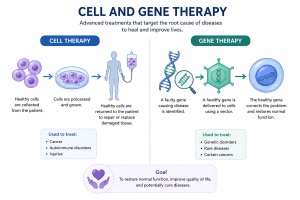
Cell therapy involves the transplantation, modification, or administration of living cells to restore or improve biological function. These therapies often use stem cells, immune cells, or engineered cells to repair damaged tissues or combat disease.
Gene therapy, on the other hand, focuses on modifying a patient’s genetic material to treat or prevent disease. This may involve replacing defective genes, introducing new genes, repairing mutations, or regulating gene expression.
Together, these technologies represent a paradigm shift in medicine, offering solutions for conditions that previously had limited or no effective treatment options.
Get Sample: https://www.precedenceresearch.com/sample/2445
Why Cell and Gene Therapy Matters
Traditional pharmaceuticals generally treat symptoms or slow disease progression. Cell and gene therapies aim to correct the root biological mechanisms responsible for disease development.
The significance of these therapies includes:
- Potential for long-term or curative outcomes
- Personalized treatment strategies
- Reduced dependence on lifelong medication
- Improved quality of life for patients
- New treatment options for rare and complex diseases
- Enhanced precision in disease targeting
For many patients with inherited genetic disorders, advanced cancers, or degenerative conditions, these therapies offer hope where conventional treatments have failed.
The Role of Precision Medicine
Precision medicine is becoming a cornerstone of modern healthcare, and cell and gene therapies are central to its evolution.
Unlike traditional one-size-fits-all treatments, precision medicine uses genetic, environmental, and lifestyle information to develop individualized therapies. Cell and gene therapies can be customized based on a patient’s specific genetic profile, improving therapeutic effectiveness while minimizing side effects.
This personalized approach is driving substantial investment from pharmaceutical companies, healthcare providers, and research institutions worldwide.
Technological Innovations Driving the Industry
CRISPR and Gene Editing
One of the most transformative developments in biotechnology has been the emergence of CRISPR gene-editing technology.
CRISPR allows scientists to precisely modify DNA sequences, enabling the correction of disease-causing mutations. Newer technologies such as base editing and prime editing are further improving accuracy and reducing unintended genetic changes.
Researchers are actively exploring gene-editing solutions for conditions including:
- Sickle cell disease
- Beta-thalassemia
- Cystic fibrosis
- Muscular dystrophy
- Inherited blindness
- Rare metabolic disorders
The growing success of gene-editing programs is expected to significantly expand therapeutic possibilities over the next decade.
Advances in Cell Engineering
Cell engineering technologies are enabling scientists to modify immune cells and enhance their disease-fighting capabilities.
Engineered cell therapies are increasingly being used in oncology, where modified immune cells can recognize and destroy cancer cells more effectively than traditional treatments.
Innovations in cell expansion, manufacturing automation, and quality control are improving scalability and commercial viability.
Viral and Non-Viral Delivery Systems
Delivering genetic material safely and effectively remains one of the most critical aspects of gene therapy.
Viral vectors, particularly adeno-associated viruses (AAVs) and lentiviruses, continue to dominate the market due to their high efficiency in delivering genetic payloads.
At the same time, non-viral technologies such as lipid nanoparticles are gaining popularity because they offer:
- Improved safety profiles
- Lower immunogenicity
- Easier manufacturing
- Greater scalability
- Reduced production costs
The success of mRNA-based technologies has accelerated research into non-viral delivery systems for gene therapy applications.
Cell and Gene Therapy Market Growth Drivers
- Rising Prevalence of Genetic and Rare Diseases: Thousands of inherited genetic disorders currently lack effective treatment options. Gene therapies provide a promising solution by directly addressing the genetic mutations responsible for disease progression. Growing awareness and diagnosis rates of rare diseases are significantly increasing demand for advanced therapeutic approaches.
- Expanding Clinical Trial Pipeline: The number of ongoing clinical trials involving cell and gene therapies has increased substantially over the past decade. Pharmaceutical and biotechnology companies are investing heavily in research programs targeting oncology, neurological disorders, cardiovascular diseases, and rare genetic conditions. The expanding pipeline continues to strengthen market growth prospects.
- Increasing Regulatory Approvals: Regulatory agencies worldwide are accelerating review pathways for breakthrough therapies addressing unmet medical needs. The growing number of approved cell and gene therapy products is boosting physician confidence and encouraging wider adoption across healthcare systems. Recent approvals for novel gene therapies demonstrate the industry’s growing maturity.
Read More: Ophthalmic Drug CDMO Market
Emerging Cell and Gene Therapy Market Trends
- Expansion of CAR-T Cell Therapies: CAR-T cell therapies continue to demonstrate remarkable success in treating various hematological cancers. Ongoing research is expanding applications into solid tumors, opening new opportunities for market growth.
- Increased Adoption of Stem Cell-Based Treatments: Stem cell therapies are gaining traction in regenerative medicine, orthopedics, neurological disorders, and cardiovascular diseases. Their ability to regenerate damaged tissues positions them as a key growth area within the broader cell therapy landscape.
- Growth of Non-Viral Delivery Systems: While viral vectors remain dominant, non-viral delivery technologies are experiencing rapid development due to their lower immunogenicity, improved safety profiles, and cost advantages. The success of mRNA-based technologies has further accelerated interest in non-viral approaches.
- Artificial Intelligence in Therapy Development: AI-powered platforms are increasingly being utilized to identify therapeutic targets, optimize gene-editing strategies, predict treatment outcomes, and accelerate drug discovery processes. These technologies are reducing development timelines and improving success rates.
Cell and Gene Therapy Market Dynamics
Driver
Growing Success of Oncology Applications
Cancer remains one of the largest application areas for cell and gene therapies. CAR-T cell treatments and engineered immune cell therapies have demonstrated impressive clinical outcomes, driving significant investment and adoption across oncology treatment centers. Oncology accounted for the largest market share among indications in recent years.
Opportunity
Expansion into Neurological and Cardiovascular Disorders
Researchers are increasingly exploring the application of gene therapies for Parkinson’s disease, heart failure, Alzheimer’s disease, and other complex conditions. Successful commercialization in these areas could unlock substantial market opportunities. Recent clinical advancements in Parkinson’s disease therapies highlight this potential.
Challenge
High Treatment Costs
One of the major barriers to widespread adoption remains the high cost of developing and administering cell and gene therapies. Manufacturing complexity, specialized infrastructure requirements, and individualized treatment processes contribute to elevated pricing.
Cell and Gene Therapy Market Segmentation
By Therapy Type
- Cell Therapy
- Gene Therapy
By Indication
- Oncology
- Genetic Disorders
- Neurological Disorders
- Cardiovascular Diseases
- Ophthalmology
- Musculoskeletal and Orthopedic Disorders
- Infectious Diseases
- Metabolic Disorders
- Others
By Vector Type
- Viral Vectors
- Non-Viral Vectors
By Manufacturing Type
- In-House Manufacturing
- Contract Development and Manufacturing Organizations (CDMOs)
- Hybrid Models
By End User
- Hospitals and Specialty Clinics
- Cancer Treatment Centers
- Research Institutes
Key Applications of Cell and Gene Therapy
Cell and gene therapies are revolutionizing treatment approaches across numerous medical specialties. In oncology, CAR-T cell therapies are providing new hope for patients with difficult-to-treat cancers. In rare genetic disorders, gene replacement and gene-editing therapies offer the possibility of long-term disease correction. Regenerative medicine applications are helping repair damaged tissues and organs, while emerging neurological and cardiovascular therapies are targeting conditions previously considered untreatable. These expanding applications continue to drive investment and innovation throughout the industry.
Future Outlook
The future of the cell and gene therapy market appears exceptionally promising. Continued advancements in gene editing, artificial intelligence, stem cell technologies, and manufacturing automation are expected to accelerate innovation and reduce treatment costs. Increasing regulatory approvals, expanding therapeutic applications, and growing adoption of personalized medicine will further strengthen market growth.
As scientific breakthroughs continue to transform previously incurable diseases into treatable conditions, cell and gene therapies are expected to become a cornerstone of next-generation healthcare. The coming decade will likely witness significant expansion in commercial availability, broader patient access, and the emergence of new therapeutic possibilities that redefine modern medicine.
𝐘𝐨𝐮 𝐜𝐚𝐧 𝐩𝐥𝐚𝐜𝐞 𝐚𝐧 𝐨𝐫𝐝𝐞𝐫 𝐨𝐫 𝐚𝐬𝐤 𝐚𝐧𝐲 𝐪𝐮𝐞𝐬𝐭𝐢𝐨𝐧𝐬, 𝐩𝐥𝐞𝐚𝐬𝐞 𝐟𝐞𝐞𝐥 𝐟𝐫𝐞𝐞 𝐭𝐨 𝐜𝐨𝐧𝐭𝐚𝐜𝐭 𝐮𝐬 𝐚𝐭 𝐬𝐚𝐥𝐞𝐬@𝐩𝐫𝐞𝐜𝐞𝐝𝐞𝐧𝐜𝐞𝐫𝐞𝐬𝐞𝐚𝐫𝐜𝐡.𝐜𝐨𝐦