
Ethoxyquin Market Size to Reach USD 446.00 Million by 2035
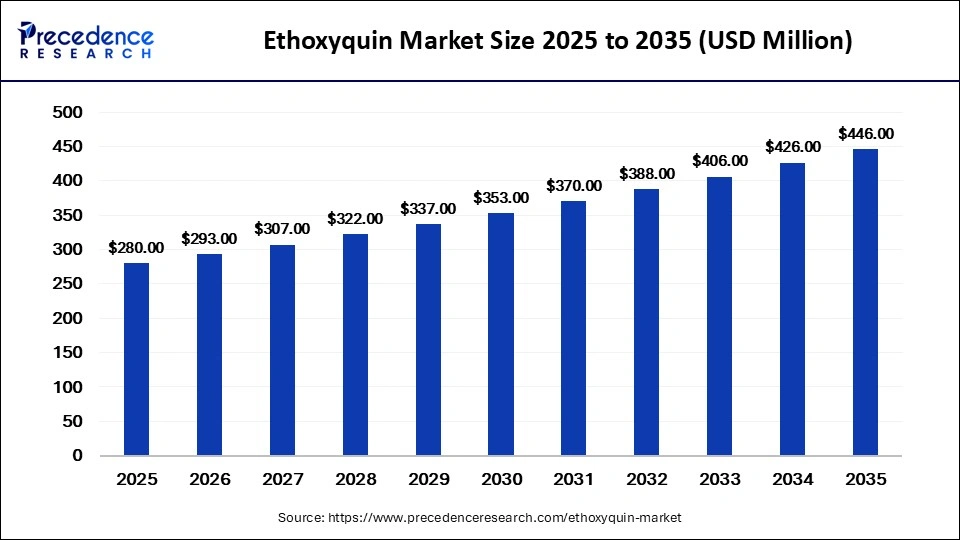
Quick Insights: What Makes the Ethoxyquin Market Important?
- The global ethoxyquin market is witnessing healthy expansion due to its critical role in preserving animal feed quality and reducing oxidative spoilage.
- Asia Pacific currently represents the largest and fastest-growing regional market, supported by robust aquaculture production and increasing livestock farming activities.
- The animal feed industry remains the dominant application segment, accounting for the majority of global ethoxyquin consumption.
- Ethoxyquin-95 Oil continues to be the leading product category due to its superior antioxidant performance and ease of incorporation into feed formulations.
- China, India, Vietnam, Thailand, Brazil, and the United States are emerging as key demand centers due to increasing protein consumption and commercial farming activities.
- Major market participants are investing in advanced feed additive technologies, regulatory compliance initiatives, and sustainable animal nutrition solutions to strengthen their market positions.
How Is Artificial Intelligence Influencing the Ethoxyquin Market?
Artificial intelligence is gradually transforming feed manufacturing and animal nutrition management. Feed producers are increasingly utilizing AI-powered quality monitoring systems to assess oxidation levels, storage conditions, and nutrient degradation risks across feed supply chains. These systems help manufacturers optimize antioxidant usage while minimizing waste and improving feed stability.
AI-driven predictive analytics is also helping livestock and aquaculture operators determine feed shelf life, monitor inventory conditions, and forecast nutritional requirements more accurately. By integrating intelligent feed management platforms, producers can maximize the effectiveness of preservatives such as ethoxyquin while reducing operational costs and improving animal health outcomes.
What Factors Are Driving Growth in the Ethoxyquin Market?
Rising Global Protein Consumption Is Creating Strong Demand
The growing global population and changing dietary preferences are increasing demand for meat, fish, poultry, and dairy products. This trend is encouraging expansion across commercial livestock and aquaculture industries, resulting in higher consumption of feed additives that preserve nutritional value and feed quality.
Expansion of Aquaculture Industry
Aquaculture continues to emerge as one of the fastest-growing food production sectors worldwide. Fish feed contains high levels of fats and oils that are susceptible to oxidation. Ethoxyquin plays a crucial role in protecting these feed formulations, making it an indispensable additive for fish farming operations.
Increasing Focus on Feed Efficiency
Feed represents one of the largest operating expenses in livestock production. Farmers and feed manufacturers are increasingly adopting antioxidant solutions to reduce feed spoilage, preserve nutrient content, and improve feed conversion efficiency.
Global Feed Transportation Requirements
As feed ingredients and finished products are transported across long distances, maintaining stability becomes essential. Ethoxyquin helps preserve feed quality during storage and shipping, supporting international trade and supply chain reliability.
What Trends Are Shaping the Future of the Market?
Trend 1: Increased Focus on Feed Quality Assurance
Manufacturers are emphasizing feed safety, consistency, and nutritional retention, driving adoption of advanced antioxidant technologies.
Trend 2: Growth of Commercial Aquaculture
The continued expansion of aquaculture facilities worldwide is strengthening demand for oxidation control solutions.
Trend 3: Integration of Smart Feed Manufacturing
Automation, digital monitoring, and AI-driven quality control systems are becoming increasingly common across feed production facilities.
Trend 4: Development of High-Efficiency Antioxidant Formulations
Companies are investing in enhanced formulations that deliver improved performance while complying with evolving regulatory requirements.
Why Does Asia Pacific Continue to Dominate the Ethoxyquin Market?
Asia Pacific remains the leading regional market due to its massive livestock population, growing aquaculture sector, and increasing demand for animal protein.
China leads regional consumption owing to its extensive feed manufacturing industry and large-scale aquaculture operations. India is emerging as a significant growth contributor due to rising poultry production and expanding commercial farming activities.
Vietnam, Indonesia, and Thailand are also witnessing increased adoption of feed antioxidants as aquaculture production scales up across the region.
What Is Driving Market Growth in North America?
North America continues to represent a mature and stable market supported by advanced livestock production systems and strong demand for feed quality management.
The United States remains a major consumer due to its large animal nutrition industry, established feed manufacturing infrastructure, and extensive commercial farming operations.
Pet food manufacturers are also contributing to regional demand by incorporating antioxidants that extend product shelf life and preserve nutritional quality.
How Is Europe Responding to Regulatory Challenges?
Europe presents a more complex market environment due to stringent regulations governing feed additives and antioxidant usage.
Although regulatory restrictions have limited growth compared to other regions, demand remains present in specialized applications where feed stability and oxidation control remain critical.
Manufacturers operating in Europe are increasingly focused on compliance-driven innovation and alternative formulation strategies.
Segment Analysis
By Product Type
Ethoxyquin-95 Oil Leads Market Demand
Ethoxyquin-95 Oil remains the most widely utilized product type due to its superior antioxidant performance, ease of handling, and compatibility with commercial feed manufacturing processes.
Powder Variants Continue to Serve Niche Applications
Ethoxyquin-66 Powder and Ethoxyquin-33 Powder maintain demand in specialized applications requiring specific formulation characteristics and handling preferences.
By Application
Animal Feed Industry Dominates Revenue Generation
The animal feed industry accounts for the largest share of global consumption due to extensive use in poultry, livestock, and aquaculture feed preservation.
Aquaculture Emerges as a High-Growth Segment
Fish farming operations increasingly rely on ethoxyquin to maintain feed stability and nutritional quality throughout storage and transportation.
Pet Food Applications Continue Expanding
Pet food manufacturers utilize ethoxyquin to extend shelf life and protect product quality, supporting steady demand growth.
Which Companies Are Influencing Market Development?
Leading participants are focusing on production expansion, product innovation, regulatory compliance, and strategic partnerships to strengthen market presence.
Key Companies Operating in the Ethoxyquin Market
- Kemin Industries
- Impextraco NV
- Perstorp Holding AB
- Novus International
- Nutreco N.V.
- Cargill Inc.
- Adisseo
- Alltech Inc.
- BASF SE
- DSM-Firmenich
Recent Industry Developments and Innovations
Leading feed additive manufacturers are actively developing advanced antioxidant formulations that improve feed stability while meeting increasingly stringent quality and safety standards.
Companies are also integrating digital monitoring technologies into feed manufacturing operations, enabling real-time assessment of oxidation risks and optimization of antioxidant dosage levels.
Strategic investments in aquaculture nutrition solutions are expected to create additional opportunities for ethoxyquin suppliers as global seafood demand continues to increase.
What Challenges Could Restrict Market Growth?
Regulatory Scrutiny
Several regions continue to evaluate the long-term safety profile of synthetic antioxidants, creating uncertainty for manufacturers and end users.
Availability of Alternative Antioxidants
Natural antioxidants and newer preservation technologies may intensify competition in certain applications.
Raw Material Cost Fluctuations
Volatility in chemical feedstock prices can impact manufacturing costs and profit margins.
Compliance Costs
Meeting evolving international regulations requires ongoing investments in testing, documentation, and product reformulation.
Case Study: Feed Preservation Success in Commercial Aquaculture
A large-scale aquaculture operator in Southeast Asia implemented antioxidant-enhanced feed formulations containing ethoxyquin to reduce oxidation-related nutrient losses during long-distance transportation.
The company reported improved feed stability, reduced spoilage rates, and enhanced feed conversion performance across multiple fish farming sites. The initiative contributed to lower operational costs and improved production efficiency, demonstrating the value of effective antioxidant technologies in modern aquaculture systems.
Conclusion
The global ethoxyquin market continues to evolve as livestock production, aquaculture expansion, and feed quality requirements become increasingly important across global food supply chains. Despite regulatory challenges in some regions, strong demand from animal nutrition industries and growing investments in aquaculture are expected to support long-term market growth.
Manufacturers that focus on innovation, sustainability, digital feed management, and regulatory compliance are likely to capture significant opportunities as the market advances toward the next decade.
Get a Sample Copy: https://www.precedenceresearch.com/sample/8465
For inquiries regarding discounts, bulk purchases, or customization requests, please contact us at sales@precedenceresearch.com