

The global healthcare cybersecurity market size is valued at USD 31.90 billion in 2025 and is predicted to increase from USD 37.32 billion in 2026 to approximately USD 142.45 billion by 2035, expanding at a CAGR of 16.12% from 2026 to 2035. The healthcare cybersecurity market is experiencing rapid growth due to strict regulatory compliance mandates and the rapid expansion of the Internet of Medical Things (IoMT) and cloud.
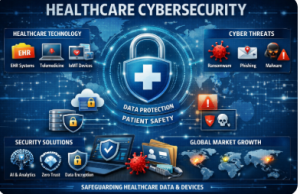

Healthcare Cybersecurity Market Overview
The healthcare cybersecurity market is experiencing rapid growth due to the increasing frequency of cyberattacks targeting healthcare organizations. Hospitals, pharmaceutical companies, healthcare payers, biotechnology firms, and telehealth providers are actively strengthening their cybersecurity infrastructure to protect critical systems and sensitive patient information.
North America currently dominates the market, accounting for over 41% of global revenue, driven by advanced healthcare IT infrastructure, stringent regulations, and significant investments in cybersecurity technologies. Meanwhile, Asia-Pacific is emerging as the fastest-growing region due to expanding healthcare digitization initiatives and increasing cybersecurity awareness.
Get Sample: https://www.precedenceresearch.com/sample/1739
Healthcare Cybersecurity Market Growth Factors
Rising Cyberattacks Against Healthcare Organizations
Healthcare remains one of the most targeted industries for cybercriminals. Ransomware attacks, phishing campaigns, credential theft, and supply chain breaches continue to disrupt healthcare operations worldwide. Industry reports identify ransomware, third-party breaches, and data breaches as the most significant cybersecurity threats facing healthcare organizations.
Recent incidents involving major healthcare providers and pharmaceutical companies demonstrate the growing scale of cyber threats. Large healthcare breaches have exposed millions of patient records and caused substantial operational disruptions.
Expansion of Digital Healthcare Infrastructure
The increasing adoption of telehealth, remote patient monitoring, cloud-based healthcare platforms, and Internet of Medical Things (IoMT) devices has expanded the healthcare attack surface. Every connected device and digital platform introduces potential vulnerabilities that require advanced cybersecurity protection.
How Digital Transformation is Reshaping Healthcare Security
The healthcare industry’s digital transformation has fundamentally altered the cybersecurity landscape. Hospitals are increasingly adopting cloud-based patient management systems, AI-powered diagnostics, virtual consultations, and connected medical devices. While these innovations improve healthcare delivery, they also create new entry points for cyber threats.
Traditional security models that focused on protecting a single network perimeter are no longer sufficient. Healthcare organizations now operate in highly interconnected environments where patient data moves between hospitals, laboratories, insurers, pharmacies, and cloud service providers. As a result, healthcare providers are adopting more comprehensive cybersecurity strategies that include continuous monitoring, identity verification, endpoint protection, and real-time threat intelligence.
Digital transformation has also accelerated the shift toward cloud security solutions. As healthcare organizations migrate workloads to the cloud, protecting cloud environments has become a top priority, driving significant investment in cloud-native cybersecurity technologies.
Emerging Technologies Strengthening Healthcare Cyber Defense
Artificial Intelligence and Machine Learning: AI and machine learning are revolutionizing healthcare cybersecurity by enabling faster threat detection and automated response mechanisms. These technologies analyze vast volumes of network traffic and user behavior to identify anomalies that may indicate cyberattacks.
AI-powered security systems can detect ransomware activities, suspicious login attempts, and malware infections in real time, helping organizations reduce response times and minimize damage.
Zero Trust Security Architecture: Healthcare organizations are increasingly implementing Zero Trust frameworks, which require continuous authentication and verification of users, devices, and applications. Rather than automatically trusting users within a network, Zero Trust ensures that every access request is validated before permissions are granted.
Key Market Trends
- AI-Powered Threat Intelligence: Healthcare organizations are increasingly leveraging AI-driven threat detection platforms to proactively identify and neutralize cyber risks before they impact operations.
- Growth of Managed Security Services: Many healthcare institutions lack dedicated cybersecurity expertise. As a result, demand for managed security services, risk assessment, and incident response services continues to rise.
- Increasing Investment in Cloud Security: The migration of healthcare applications and patient records to cloud environments is accelerating demand for cloud security solutions. Cloud security is projected to be among the fastest-growing segments of the healthcare cybersecurity market.
- Focus on Medical Device Protection: The growing number of connected healthcare devices is driving investments in specialized cybersecurity solutions designed to protect medical equipment and IoMT ecosystems.
Market Dynamics
Driver
Escalating Ransomware Threats
Ransomware attacks remain the most significant driver of healthcare cybersecurity investments. Cybercriminals target healthcare organizations because operational disruptions can directly impact patient care, increasing the likelihood of ransom payments. Recent industry data shows ransomware attacks continue to rise across the healthcare sector.
Opportunity
Expansion of Digital Health Services
The rapid growth of telemedicine, remote monitoring, AI-driven healthcare applications, and digital therapeutics presents significant opportunities for cybersecurity vendors. As healthcare becomes increasingly digital, demand for advanced security solutions will continue to grow.
Challenge
Budget Constraints and Skills Shortages
Many healthcare providers, particularly smaller hospitals and clinics, struggle with limited cybersecurity budgets and shortages of qualified security professionals. These challenges can delay cybersecurity implementation and increase organizational risk.
Read More: Medical Device Testing Market