

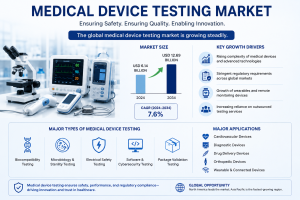
The global medical device testing market size is calculated at USD 10.76 billion in 2025 and is predicted to increase from USD 11.77 billion in 2026 to approximately USD 25.82 billion by 2035, expanding at a CAGR of 9.15% from 2026 to 2035. Stringent regulations and rising demand for safe, high-quality medical devices also drive the market.

Introduction to Medical Device Testing
Medical devices have become an essential part of modern healthcare, helping physicians diagnose, monitor, and treat a wide range of medical conditions. From simple thermometers and blood glucose monitors to advanced imaging systems and implantable cardiac devices, medical devices play a crucial role in improving patient outcomes. However, before these devices can be used safely in clinical settings, they must undergo rigorous testing to ensure they meet quality, safety, and performance standards.
Medical device testing is a critical process that evaluates whether a device functions as intended and complies with regulatory requirements. As healthcare technologies become more sophisticated, testing procedures have become increasingly comprehensive, covering everything from material safety and durability to software reliability and cybersecurity. The growing emphasis on patient safety, combined with stricter regulatory frameworks, continues to drive demand for advanced medical device testing services worldwide.
What is Medical Device Testing?
Medical device testing refers to a series of assessments conducted throughout the product development lifecycle to verify the safety, effectiveness, and reliability of medical devices. The process involves evaluating physical, chemical, biological, mechanical, and electrical characteristics to ensure devices perform as expected under real-world conditions.
Testing may include biocompatibility studies to assess interactions between device materials and human tissues, sterility testing to prevent infections, performance evaluations to verify functionality, and software validation for digital health devices. Manufacturers also conduct packaging and transportation testing to ensure devices remain safe and effective throughout distribution and storage. By identifying potential issues before commercialization, medical device testing helps manufacturers reduce risks, improve product quality, and comply with global regulatory standards.
Get Sample Link: https://www.precedenceresearch.com/sample/4429
Why Medical Device Testing is Important
Medical device testing is essential for protecting patient health and maintaining confidence in healthcare technologies. Devices that fail to perform correctly can lead to inaccurate diagnoses, ineffective treatments, or serious safety concerns. Comprehensive testing helps identify defects, material incompatibilities, and performance issues before products reach the market.
In addition to safeguarding patients, testing supports regulatory compliance and facilitates product approvals from authorities such as the FDA in the United States and regulatory agencies across Europe and Asia-Pacific. Thorough testing also helps manufacturers avoid costly product recalls, legal liabilities, and reputational damage. As healthcare providers increasingly rely on advanced medical technologies, robust testing practices have become a fundamental requirement for market succes
Different Types of Medical Device Testing Services
Medical device testing involves a variety of specialized services designed to evaluate product safety, functionality, and regulatory compliance throughout the development lifecycle.
- Biocompatibility Testing: Biocompatibility testing assesses how medical device materials interact with the human body. These tests help determine whether a device may cause irritation, toxicity, allergic reactions, or other adverse biological responses. This type of testing is particularly important for implants, catheters, and devices that come into direct contact with tissues or bodily fluids.
- Microbiology and Sterility Testing: Sterility testing ensures that medical devices are free from harmful microorganisms that could cause infections. Microbiology testing evaluates contamination risks and verifies the effectiveness of sterilization methods used during manufacturing and packaging processes.
- Chemical Characterization Testing: Chemical testing examines the composition of materials used in medical devices. It helps identify potentially harmful substances and ensures compliance with safety regulations. This testing is essential for evaluating material stability and long-term device performance.
- Mechanical and Performance Testing: Mechanical testing assesses a device’s strength, durability, and ability to withstand real-world operating conditions. Performance testing verifies that the device functions according to design specifications and consistently delivers expected results throughout its intended lifespan.