
Hematopoietic Stem Cell Transplantation Market Size to Attain USD 24.32 Billion by 2035
The global hematopoietic stem cell transplantation market is witnessing remarkable momentum as the healthcare industry intensifies efforts to combat blood cancers, inherited immune deficiencies, and autoimmune diseases through advanced regenerative medicine. The market size was valued at USD 11.80 billion in 2025 and is projected to grow from USD 12.69 billion in 2026 to approximately USD 24.32 billion by 2035, registering a CAGR of 7.50% during the forecast period from 2026 to 2035.
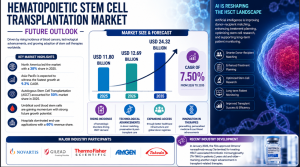
The increasing burden of leukemia, lymphoma, multiple myeloma, and genetic hematological disorders is significantly driving the adoption of hematopoietic stem cell transplantation (HSCT) procedures globally. Simultaneously, technological innovations in donor matching, stem cell preservation, immunosuppressive therapies, and post-transplant monitoring are enhancing treatment success rates and improving long-term survival outcomes.
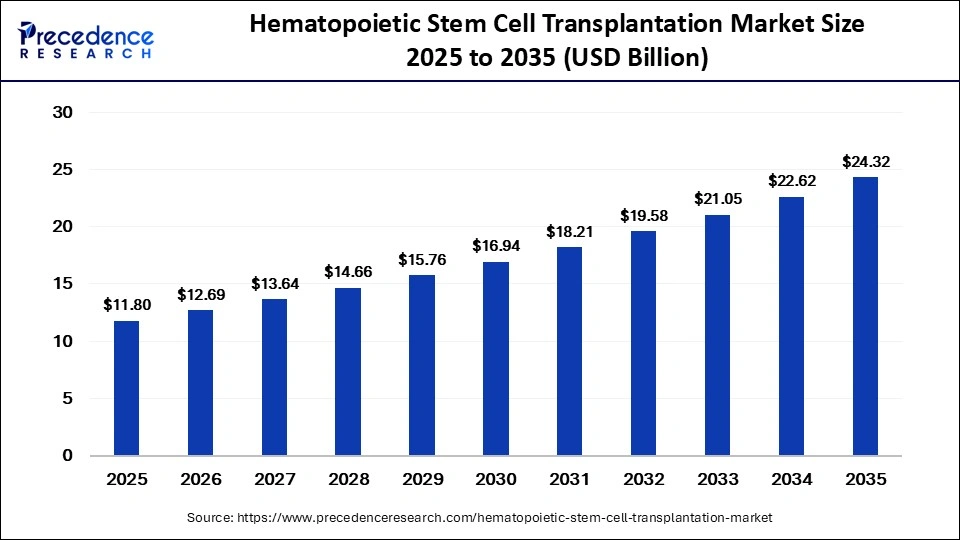
Hematopoietic Stem Cell Transplantation Market Key Insights
- The global hematopoietic stem cell transplantation market reached USD 11.80 billion in 2025 and is expected to hit USD 24.32 billion by 2035, expanding at a CAGR of 7.50%.
- North America dominated the market in 2025 by capturing 38% of total revenue, supported by advanced healthcare infrastructure and strong regenerative medicine investments.
- Asia-Pacific is anticipated to witness the fastest growth during the forecast period with a CAGR of 9.2%, fueled by expanding healthcare access and stem cell research programs.
- Autologous stem cell transplantation emerged as the leading transplant type in 2025 with a 50% market share due to lower rejection risks and high compatibility.
- Hospitals accounted for nearly 60% of market revenue in 2025 owing to rising demand for specialized transplant care and advanced oncology services.
- Hematologic malignancies represented the largest application segment with 50% market share, driven by increasing leukemia and lymphoma cases globally.
- Umbilical cord blood stem cells are expected to gain significant traction due to lower graft-versus-host disease risks and expanding cord blood banking initiatives.
- Major industry participants are increasingly investing in AI-driven donor matching, personalized transplantation protocols, and gene-editing technologies.
Why is Hematopoietic Stem Cell Transplantation Becoming a Critical Healthcare Solution?
Hematopoietic stem cell transplantation has emerged as one of the most effective therapeutic approaches for treating complex hematologic malignancies and inherited immune disorders. The procedure involves replacing damaged or diseased bone marrow with healthy stem cells capable of restoring blood cell production and immune system functionality.
The increasing prevalence of blood cancers and genetic diseases among aging populations is rapidly increasing the global demand for both autologous and allogeneic transplantation procedures. Additionally, growing awareness regarding early disease diagnosis, advancements in supportive care therapies, and the expansion of specialized transplant centers are further strengthening market growth worldwide.
Healthcare systems across developed and emerging economies are increasingly prioritizing investments in stem cell research, regenerative medicine, and personalized therapies to improve patient outcomes and reduce long-term treatment complications.
How is Artificial Intelligence Revolutionizing the Hematopoietic Stem Cell Transplantation Market?
Artificial intelligence is becoming a transformative force within the hematopoietic stem cell transplantation ecosystem by enhancing diagnostic precision, donor-recipient matching accuracy, and personalized treatment planning. AI-enabled platforms are now capable of analyzing massive genomic datasets to identify compatible donors more efficiently and reduce transplantation-related complications.
Machine learning technologies are also supporting predictive analytics for post-transplant recovery monitoring, graft survival analysis, and early complication detection. Hospitals and research institutes are increasingly integrating AI-powered systems to optimize operational workflows and improve transplant success rates.
Furthermore, AI is accelerating stem cell research by streamlining drug discovery processes, improving cellular engineering methods, and enabling personalized medicine approaches. These innovations are expected to significantly improve treatment outcomes while reducing healthcare costs associated with failed transplant procedures and prolonged hospitalization.
Hematopoietic Stem Cell Transplantation Market Size and Forecast Snapshot
| Market Metrics | Details |
|---|---|
| Market Size in 2025 | USD 11.80 Billion |
| Market Size in 2026 | USD 12.69 Billion |
| Projected Market Size by 2035 | USD 24.32 Billion |
| CAGR (2026–2035) | 7.50% |
| Dominant Region | North America |
| Fastest Growing Region | Asia-Pacific |
| Base Year | 2025 |
| Forecast Period | 2026–2035 |
What are the Key Growth Drivers Fueling the Market?
Rising Incidence of Hematologic Disorders
The sharp rise in leukemia, lymphoma, multiple myeloma, thalassemia, and inherited immune deficiencies is significantly increasing the need for effective stem cell transplantation procedures. HSCT has become a preferred treatment approach for restoring bone marrow functionality and achieving long-term disease remission.
Advancements in donor compatibility testing, stem cell preservation methods, and immunotherapy-based supportive care are improving transplantation success rates and driving patient confidence in stem cell therapies.
Expansion of Specialized Transplant Infrastructure
The growing establishment of transplant-specific oncology departments, specialized stem cell centers, and regenerative medicine facilities across developed and emerging markets is expanding treatment accessibility worldwide.
Governments and healthcare organizations are also increasing investments in clinical research programs and stem cell banking infrastructure to support long-term market growth.
Growing Adoption of Personalized Medicine
The emergence of personalized transplantation protocols based on genetic profiling and disease-specific characteristics is improving patient outcomes while minimizing side effects and transplant rejection risks.
Gene-editing technologies and regenerative medicine innovations are further opening new possibilities for highly targeted and individualized stem cell therapies.
What Opportunities are Creating New Revenue Streams in the Market?
Can Gene Editing Transform the Future of Stem Cell Transplantation?
Gene-editing technologies such as CRISPR-based therapies are expected to revolutionize the treatment of inherited blood disorders and immune deficiencies. Researchers are increasingly exploring ways to modify stem cells genetically to eliminate disease-causing mutations before transplantation.
This approach has the potential to reduce relapse risks, improve survival outcomes, and create curative therapies for rare genetic diseases.
Why is Cord Blood Banking Gaining Significant Attention?
Umbilical cord blood stem cells are emerging as a highly promising alternative stem cell source due to their reduced graft-versus-host disease risks and greater donor availability. The growing number of public and private cord blood banks globally is expected to strengthen future transplantation accessibility.
The increasing adoption of pediatric transplantation therapies is also contributing to rapid growth in this segment.
How are Emerging Markets Becoming High-Growth Destinations?
Countries across Asia-Pacific and Latin America are heavily investing in healthcare modernization, oncology care expansion, and regenerative medicine research programs. These investments are significantly improving access to advanced transplantation services and creating substantial market opportunities for global players.
Hematopoietic Stem Cell Transplantation Market Segment Analysis
Why Did Autologous Stem Cell Transplantation Dominate the Market?
The autologous stem cell transplantation (ASCT) segment captured 50% of total market share in 2025 due to its widespread use in treating lymphoma and multiple myeloma. Since patients receive their own stem cells, the risk of graft-versus-host disease is significantly lower, making ASCT a safer and more preferred therapeutic option.
Meanwhile, allogeneic stem cell transplantation is projected to expand at the fastest CAGR of 7.8% owing to growing demand for full immune system restoration and increasing donor registry expansion globally.
Type of Transplant Revenue Share
| Type of Transplant | 2025 Share | 2035 Share | CAGR |
|---|---|---|---|
| Autologous Stem Cell Transplantation (ASCT) | 50% | 48% | 6.2% |
| Allogeneic Stem Cell Transplantation (AlloSCT) | 40% | 42% | 7.8% |
| Syngeneic Stem Cell Transplantation | 10% | 10% | 5.0% |
Which Stem Cell Source is Leading Clinical Adoption?
Bone marrow-derived stem cells maintained dominance with a 40% market share in 2025 because of their established clinical efficacy in treating hematologic malignancies and inherited blood disorders.
However, umbilical cord blood stem cells are anticipated to grow rapidly due to their lower rejection risks and increasing utilization in pediatric transplantation procedures.
Stem Cell Source Market Share
| Stem Cell Source | 2025 Share | 2035 Share | CAGR |
|---|---|---|---|
| Bone Marrow-derived Stem Cells | 40% | 38% | 5.2% |
| Peripheral Blood Stem Cells | 35% | 37% | 6.0% |
| Umbilical Cord Blood Stem Cells | 25% | 25% | 7.8% |
Why are Hematologic Malignancies Driving Market Demand?
The hematologic malignancies segment led the market with a 50% revenue share in 2025 due to increasing global incidence of leukemia, lymphoma, and multiple myeloma.
Stem cell transplantation remains one of the most effective therapeutic solutions for patients undergoing intensive chemotherapy or bone marrow restoration procedures.
Meanwhile, autoimmune diseases are expected to emerge as one of the fastest-growing application areas, supported by expanding clinical trials focused on lupus, multiple sclerosis, and rheumatoid arthritis treatment.
Which End-Use Segment Generates the Highest Revenue?
Hospitals dominated the market with a 60% share in 2025 because they possess specialized oncology departments, intensive care facilities, and multidisciplinary transplant teams required for complex transplantation procedures.
Research institutes are expected to grow at the fastest pace due to increasing investments in regenerative medicine, stem cell engineering, and personalized treatment development.
End-Use Market Share
| End-Use | 2025 Share | 2035 Share | CAGR |
|---|---|---|---|
| Hospitals | 60% | 58% | 7.0% |
| Specialized Hematopoietic Transplant Centers | 25% | 28% | 8.0% |
| Research Institutes | 10% | 12% | 8.5% |
| Homecare | 5% | 5% | 6.0% |
Hematopoietic Stem Cell Transplantation Market Regional Analysis
Regional Market Forecast (2025–2035, USD Billion):
| Year | North America | Europe | Asia Pacific | Middle East & Africa | Latin America |
|---|---|---|---|---|---|
| 2025 | 4.48 | 3.54 | 2.36 | 0.59 | 0.83 |
| 2026 | 4.78 | 3.78 | 2.60 | 0.64 | 0.89 |
| 2027 | 5.10 | 4.03 | 2.87 | 0.69 | 0.97 |
| 2028 | 5.43 | 4.31 | 3.17 | 0.75 | 1.05 |
| 2029 | 5.79 | 4.60 | 3.50 | 0.82 | 1.13 |
| 2030 | 6.18 | 4.91 | 3.86 | 0.89 | 1.23 |
| 2031 | 6.59 | 5.24 | 4.26 | 0.96 | 1.33 |
| 2032 | 7.02 | 5.60 | 4.70 | 1.05 | 1.44 |
| 2033 | 7.49 | 5.97 | 5.19 | 1.14 | 1.56 |
| 2034 | 7.98 | 6.38 | 5.73 | 1.23 | 1.69 |
| 2035 | 8.51 | 6.81 | 6.32 | 1.34 | 1.82 |
Regional CAGR (2025–2035):
- North America: 6.62%
- Europe: 6.76%
- Asia Pacific: 10.36%
- Middle East & Africa: 8.53%
- Latin America: 8.24%
Why Does North America Continue to Lead the Global Market?
North America accounted for 38% of the global hematopoietic stem cell transplantation market in 2025 due to strong healthcare infrastructure, advanced regenerative medicine capabilities, and widespread adoption of innovative transplantation technologies.
The United States remains the primary growth engine in the region, supported by increasing blood cancer prevalence, extensive donor registries, and significant R&D investments by pharmaceutical and biotechnology companies.
North America Market Forecast
| Region | Market Size 2025 | Market Size 2035 | CAGR |
|---|---|---|---|
| North America | USD 4.48 Billion | USD 9.36 Billion | 7.65% |
| United States | USD 3.36 Billion | USD 7.07 Billion | 7.72% |
How is Asia-Pacific Emerging as the Fastest-Growing Region?
Asia-Pacific is projected to register the fastest CAGR of 9.2% through 2035 due to increasing healthcare modernization efforts, expanding stem cell research initiatives, and rising prevalence of hematologic diseases.
Countries such as Japan, China, India, and South Korea are heavily investing in regenerative medicine infrastructure and personalized treatment technologies.
Japan, in particular, continues to emerge as a leading innovation hub for stem cell therapy and gene-editing research.
Why is Europe Witnessing Strong Growth Momentum?
Europe held approximately 30% of the global market share in 2025, driven by robust healthcare systems, increasing investments in stem cell banking, and expanding transplantation infrastructure.
The UK remains one of the leading markets in the region due to its advanced clinical research ecosystem and growing adoption of regenerative medicine therapies.
The country-wise Hematopoietic Stem Cell Transplantation market forecast for 2025 and 2035 with CAGR (%) has been calculated based on the regional values and country shares. Here are the results (USD Billion):
| Region | Country | 2025 (USD Bn) | 2035 (USD Bn) | CAGR (%) |
|---|---|---|---|---|
| North America | USA | 3.81 | 7.23 | 6.62 |
| North America | Canada | 0.67 | 1.28 | 6.62 |
| Europe | Germany | 0.71 | 1.36 | 6.76 |
| Europe | France | 0.53 | 1.02 | 6.76 |
| Europe | UK | 0.53 | 1.02 | 6.76 |
| Europe | Italy | 0.35 | 0.68 | 6.76 |
| Europe | Spain | 0.35 | 0.68 | 6.76 |
| Europe | Rest of Europe | 1.06 | 2.04 | 6.76 |
| Asia Pacific | Japan | 0.59 | 1.58 | 10.36 |
| Asia Pacific | China | 0.71 | 1.90 | 10.36 |
| Asia Pacific | India | 0.35 | 0.95 | 10.36 |
| Asia Pacific | Australia | 0.24 | 0.63 | 10.36 |
| Asia Pacific | Rest of APAC | 0.47 | 1.26 | 10.36 |
| Middle East & Africa | Saudi Arabia | 0.21 | 0.47 | 8.53 |
| Middle East & Africa | South Africa | 0.15 | 0.33 | 8.53 |
| Middle East & Africa | Rest of MEA | 0.24 | 0.54 | 8.53 |
| Latin America | Brazil | 0.42 | 0.91 | 8.24 |
| Latin America | Mexico | 0.17 | 0.36 | 8.24 |
| Latin America | Rest of LATAM | 0.25 | 0.55 | 8.24 |
Recent Industry Developments Reshaping the Competitive Landscape
The hematopoietic stem cell transplantation market is witnessing strong innovation activity among leading biotechnology and pharmaceutical companies.
- In January 2026, the FDA approved narsoplimab-wuug (Yartemlea) developed by Omeros for treating HSCT-associated thrombotic microangiopathy in patients aged two years and older.
- In September 2025, Limula partnered with Institut Paoli-Calmettes (IPC) to evaluate LimONE technology designed to improve stem cell transplant processing quality.
- In January 2025, Medexus received FDA approval for GRAFAPEX (treosulfan) injection for use in allogeneic bone marrow and peripheral blood stem cell transplantation therapies.
Leading Companies Operating in the Hematopoietic Stem Cell Transplantation Market
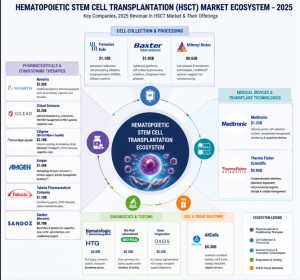
- Novartis
- Gilead Sciences
- Baxter International
- Fresenius Kabi
- Celgene
- Medtronic
- Amgen
- Miltenyi Biotec
- AllCells
- Thermo Fisher Scientific
- Bio-Rad Laboratories
- Takeda Pharmaceutical Company
- Sandoz
Segments Covered in the Report
By Type of Transplant
- Autologous Stem Cell Transplantation (ASCT)
- Allogeneic Stem Cell Transplantation (AlloSCT)
- Syngeneic Stem Cell Transplantation
By Stem Cell Source
- Bone Marrow-derived Stem Cells
- Peripheral Blood Stem Cells
- Umbilical Cord Blood Stem Cells
By Conditioning Regimen
- Myeloablative Conditioning
- Non-myeloablative Conditioning
- Reduced Intensity Conditioning
By Application
- Hematologic Malignancies
- Non-malignant Hematological Disorders
- Autoimmune Diseases
- Genetic Disorders
By End-Use
- Hospitals
- Specialized Hematopoietic Transplant Centers
- Research Institutes
- Homecare
By Region
- North America
- Latin America
- Europe
- Asia-pacific
- Middle and East Africa
Get this report to explore global market size, share, CAGR, and trends, featuring detailed segmental analysis and an insightful competitive landscape overview @ https://www.precedenceresearch.com/sample/8421
You can place an order or ask any questions. Please feel free to contact us at sales@precedenceresearch.com |+1 804 441 9344